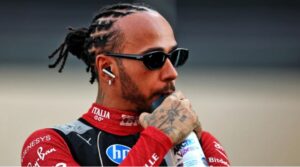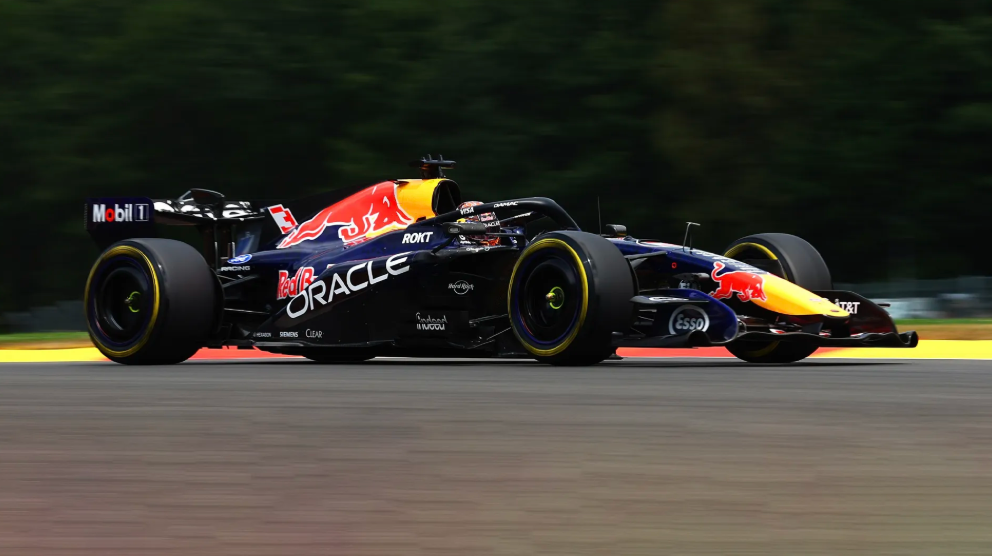
Max Verstappen kicked off the Belgian Grand Prix with a bang, clocking the fastest time in the opening practice session at Spa-Francorchamps. The Red Bull ace edged out Lewis Hamilton by a slim 0.145 seconds, while Ferrari’s Charles Leclerc trailed closely behind in third, just 0.062 seconds off Verstappen’s pace. This impressive performance comes on the heels of a challenging 2026 season for Verstappen, who currently finds himself in seventh place in the standings after a tough year for Red Bull. Even though the team is still on the hunt for its first race win of the season, Verstappen quickly showcased his speed at Spa, giving Red Bull a much-needed morale boost as they head into the weekend.
Red Bull’s encouraging start continued with Isack Hadjar taking fourth, underlining the team’s early speed. Oscar Piastri finished fifth for McLaren despite a late hydraulic issue. Mercedes, dominant in qualifying throughout 2026, had a disappointing session as championship leader Kimi Antonelli placed sixth, over half a second behind Verstappen. Lando Norris was seventh, while George Russell ended the session in eighth.
Why Spa-Francorchamps Feels Different Under Formula 1’s 2026 Rules
The new Formula 1 regulations are still sparking debate, and the recent events at Spa-Francorchamps really brought that to light. Before the weekend kicked off, drivers had voiced concerns that the energy-heavy power units would make fast circuits less challenging. After Friday’s practice sessions, opinions were still all over the place. While some were bracing for a much less thrilling experience, others felt that the changes had stripped away some of the circuit’s classic charm.
From the sidelines, the cars still dazzled as they zipped through Eau Rouge and Raidillon. Verstappen hit an impressive 316 km/h in FP1, and Antonelli later pushed it to 327 km/h during FP2, proving that these machines are still incredibly fast in the high-speed sections. Their quick direction changes also wowed the crowd, keeping some of Spa’s iconic visual allure intact.
However, the trade-offs became apparent as the lap progressed. Drivers found themselves needing to conserve and recharge battery power right after Eau Rouge, which meant less acceleration in sectors that used to reward full throttle. Liam Lawson pointed out that the cars start harvesting energy almost immediately after Eau Rouge, leaving them with less power through Les Combes, Pouhon, and other flowing corners. This even led drivers to downshift earlier than usual to regain some energy.
That said, several corners still showcased impressive speed. The cars zipped through the no-name left-hander and Pouhon, albeit a bit slower than in previous years. Lewis Hamilton captured the sentiment perfectly, noting that while the corners still felt enjoyable, the noticeable drop in engine power on the straights was hard to ignore.