The ICC Women’s T20 World Cup has given us some unforgettable cricket moments over the years. From political tensions and umpiring disagreements to selection disputes and corruption worries, there have been plenty of incidents that have drawn attention away from the actual cricket. The most recent example unfolded at Edgbaston during the 2026 India-Pakistan match, where a noticeable pre-match snub ignited a global conversation. These events have not only shaped the narratives of the tournament but have also prompted official reactions and highlighted the immense pressure that women’s cricket faces on the international stage.
Controversies in the Women’s T20 World Cup often go beyond just the outcomes of matches. In many instances, officials, coaches, and governing bodies have had to step in. Some situations led to clarifications of rules, while others sparked public disputes and investigations. Collectively, these moments stand out as some of the most talked-about in the tournament’s history.
India vs Pakistan (2026)
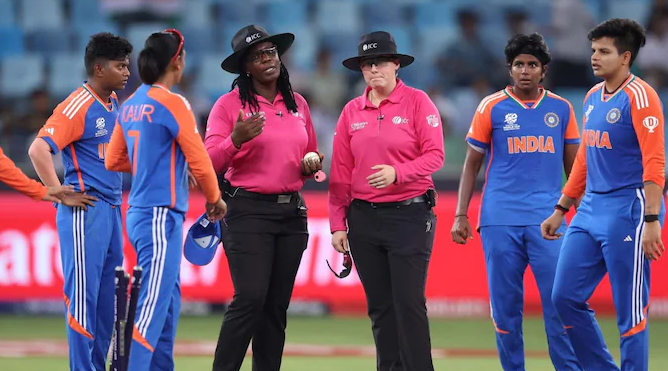
The biggest buzz during the 2026 Women’s T20 World Cup erupted at Edgbaston when India’s captain, Harmanpreet Kaur, decided against the traditional handshake with Pakistan’s skipper, Fatima Sana, both before and after their Group A match. This decision seemed to echo India’s so-called “No Handshake” policy, which has been influenced by ongoing tensions between the two nations. While India celebrated a solid 64-run victory, with Pakistan only managing to score 106 runs, the focus shifted away from the game itself. Deepti Sharma shone brightly with an impressive bowling performance, taking 5 wickets for just 10 runs, but it was the diplomatic rift that stole the headlines from this match.
Also Read | IND-W vs PAK-W: Top Records and Statistics Ahead of Women’s T20 World Cup Match
India vs Australia (2024)
A significant umpiring controversy unfolded during a pivotal Group A match in Dubai when Australia’s Phoebe Litchfield dodged an LBW call thanks to DRS. After missing a reverse sweep against Deepti Sharma, Litchfield was initially ruled out. However, the third umpire reversed the decision, concluding that the ball had pitched outside leg stump. India’s captain, Harmanpreet Kaur, voiced her strong objections, claiming that Litchfield’s switch-hit stance should have influenced the line assessment. The officials stood by the ICC’s interpretation of the law, and this decision sparked plenty of discussion in the aftermath of Australia’s win.
Bangladesh Spot-Fixing Scandal (2023)
The 2023 Women’s T20 World Cup in South Africa faced a serious shake-up due to a corruption scandal when a player from Bangladesh came forward about a spot-fixing attempt. An audio clip reportedly caught former Bangladesh international Shohely Akter trying to entice the player with money to influence certain moments in the matches. Thankfully, the player turned down the offer and quickly alerted the ICC Anti-Corruption Unit. Their prompt action ensured that the integrity of the tournament remained intact, but this incident raised important questions about the risks of betting-related issues in women’s cricket.
India vs England (2018)
India’s semi-final loss to England in Antigua turned into one of the most talked-about selection controversies in tournament history. Veteran batter Mithali Raj, who had impressively notched up back-to-back half-centuries against Pakistan and Ireland, was shockingly left out of the playing XI. This decision backfired spectacularly as India crumbled from a promising 89 for 2 to a dismal 112 all out. England, on the other hand, chased down the target with ease, clinching victory by eight wickets and still having 17 balls to spare. The defeat ignited a public spat between Raj and head coach Ramesh Powar, resulting in some major shake-ups within the team.
India vs Pakistan (2016)
A rain-hit clash between India and Pakistan in Delhi led to one of the most controversial finishes of the tournament. India managed to score 96 for 7, while Pakistan was at 77 for 6 after 16 overs in their chase. Just when things were heating up, heavy rain came pouring down, forcing the officials to turn to the Duckworth-Lewis-Stern method. In a surprising twist, Pakistan was declared the winner by just two runs, as the par score was set at 75. This decision sparked a lot of questions from Indian players and fans, who felt the conditions were still good enough for play to continue, turning the outcome into a hot topic of debate.