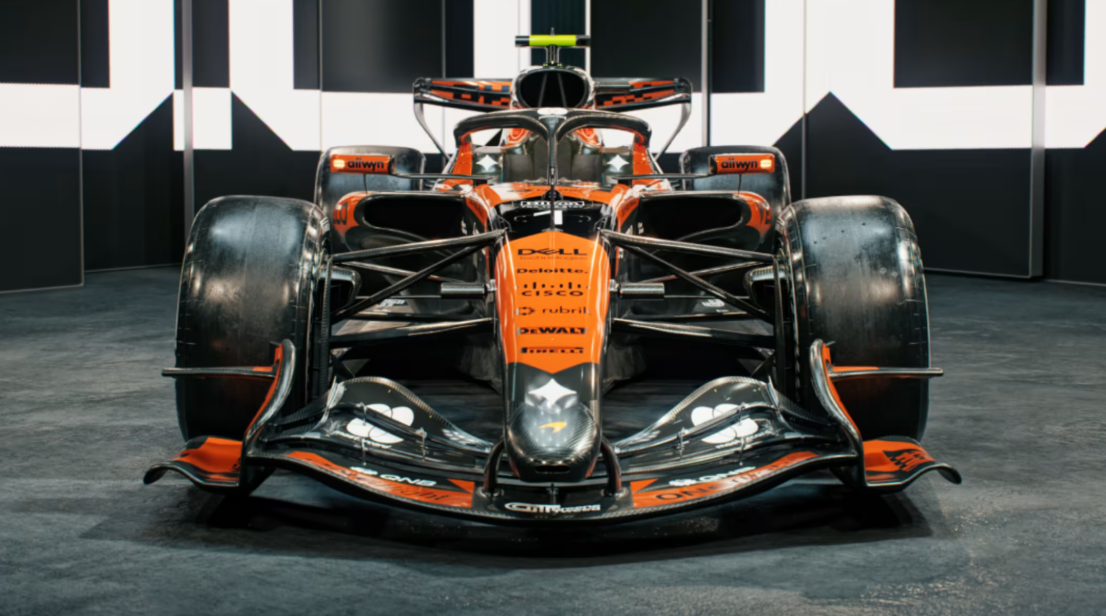
This year’s Formula 1 racing regulations for 2026 are bringing attention back to something that was not always seen as a critical element before. The best way to see that is to consider Mercedes versus McLaren. These two teams may be using the same Mercedes power unit. However, the difference lies in the gearboxes as the two have taken two distinct routes regarding their gear ratios. This means that the performance of each vehicle is affected when it comes to acceleration, reaching maximum speeds, energy conservation and usage, as well as circuit performance. The choice of gearing makes one team superior over another in certain situations.
The point is quite clear when McLaren uses its own gearbox as opposed to Mercedes’ gearbox setup. Woking chose to use shorter gear ratios, while Mercedes used longer gearing. In other words, each team gets the most out of its engine in a unique way.
Mercedes vs McLaren: The Gearbox Differences Explained
McLaren gains more punch while Mercedes gains more speed
The most significant disparity can be noted when accelerating. The smaller gear ratios of McLaren contribute to increased torque sent to the rear wheels and result in faster launches and hard accelerations for the MCL40. One can observe such a disparity during the early season races since McLaren often managed to deliver a superior launch compared to Mercedes even though they used the same power unit.
Also Read | Who is Lando Norris Girlfriend? : Age, Profession, Net Worth, and More
There is, however, a drawback associated with such an approach to gearing. The longer gear ratios enable the W17 to maintain its speed on long straights. With the extension of the straight, the performance gap increased, and in both Miami and Montreal, McLaren showed strong results when accelerating, but Mercedes caught up when it came to maintaining maximum speed. Sometimes, the gap reached over 10 km/h as the track straightened out. Therefore, Mercedes excels in circuits that require high top speeds.
Mercedes uses gearing to improve energy management
The gearbox choice also influences how each team manages electrical energy. Under the 2026 regulations, energy recovery and deployment play a larger role in overall performance. Longer gearing helps Mercedes maintain engine speeds that support efficient battery recharging and energy use throughout a lap.
This became especially important at events with strict energy limits. In Canada, where qualifying energy recovery was restricted to 6 MJ per lap, teams had to be more selective with deployment. Mercedes benefited from its approach on the longest straight, while McLaren had to adjust its energy strategy to reduce its speed deficit. In Miami, where teams could recover up to 8 MJ, a similar pattern emerged. The longer the straight, the more the Mercedes package gained an advantage.
McLaren keeps full control of its rear-end design
In addition to improved performance on the track, the design flexibility allowed by the gearbox of McLaren is another positive aspect. While other racing teams must use rear end assemblies produced by Mercedes, McLaren designs its own casing and the components housed inside it. This enables McLaren to design its own rear end suspension and bodywork according to their own aerodynamic considerations.
Such an advantage is especially significant as the gearbox has a close relationship with the mounting points of the suspension and with rear bodywork design. As a result of such freedom, McLaren is able to develop cars that suit their philosophy of aerodynamics, despite using a different engine to Mercedes.