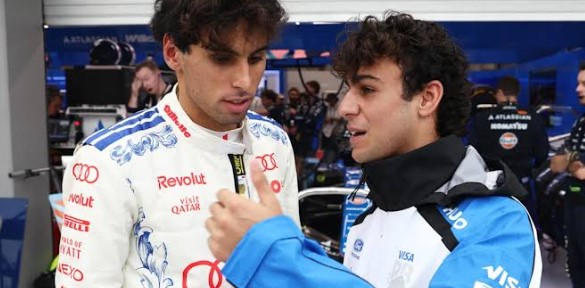
Three young faces of Formula 1’s next generation will face similar mechanical realities this weekend in Austin. Gabriel Bortoleto, Franco Colapinto and Arvid Lindblad will all start the United States Grand Prix further back than their qualifying results would otherwise allow. The FIA confirmed the penalties on Friday after each of them exceeded their season allocation of power-unit components. Bortoleto, the Brazilian now racing for Audi, carries the heaviest sanction with a 20-place grid drop. His team fitted a fourth energy store and a fourth control electronics unit, both of which were limited to three per season.
Some Additional elements, including a new internal combustion engine, turbocharger and exhaust, stayed within the rules and did not add further places. Colapinto, the Argentine driving for Alpine, receives a 10-place drop for taking a fourth control electronics unit. The change comes as the team continues its fight to close the gap on midfield rivals. Lindblad, the British youngster at Racing Bulls and the youngest driver on the 2026 grid, faces a five-place penalty for his sixth internal combustion engine. Only four are permitted and this is his second excess, so the tariff is five places rather than ten.
How Power-Unit penalties work in Formula 1
Power-unit regulations exist to control costs and limit development arms races. Teams manage finite pools of engines, energy stores and electronics across a long calendar. When reliability or performance forces a change beyond the limit, the grid penalty is the price. The first excess of any element costs ten places while the next subsequent excesses cost five. Penalties above fifteen places send a driver to the rear.
Lindblad is still in his first full season after rapid junior success that included becoming the youngest winner in both Formula 3 and Formula 2. Colapinto has already faced the pressure of a full-time seat and the scrutiny that follows high-profile incidents. Bortoleto arrived with a Formula 2 title and has been adapting to the higher demands of a works programme that is still finding its feet.