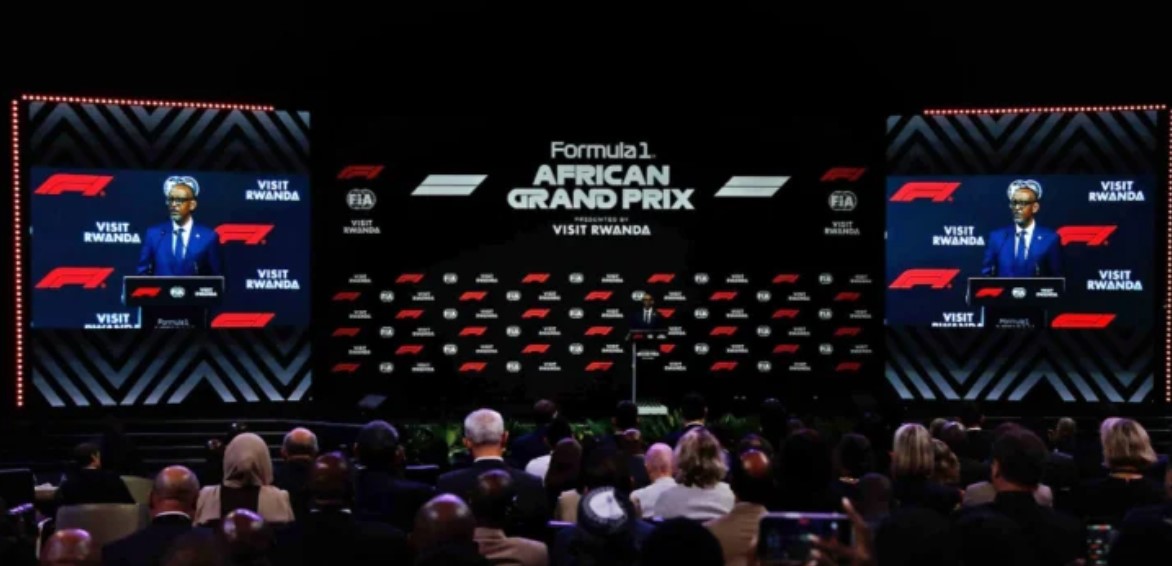
Formula 1 have confirmed a landmark 10-year deal that will bring the African Grand Prix to Rwanda in the early 2030s which will be the first race on the continent since the 1993 South African Grand Prix at Kyalami. The event will be staged at an entirely new, purpose-built circuit in Bugesera, roughly 40 kilometres (25 miles) south of the capital Kigali and right next to the new international airport under construction there. The track is being designed by former Formula 1 driver Alexander Wurz’s firm (WurzDesign), with input from the experienced Hermann Tilke organisation.
Plans describe a fast, flowing layout of about 6 km with 17 corners that will take advantage of Rwanda’s hilly terrain, delivering nearly 200 metres of elevation change per lap and putting spectators close to the action. It will be built to full FIA Grade 1 standards and form part of a wider sports, tourism and commercial development intended for year-round use, including other motorsport events, conferences and entertainment.
F1 President Stefano Domenicali Hails Rwanda Grand Prix Deal as a Landmark Moment
F1 President and CEO Stefano Domenicali called the agreement a landmark moment, saying that with Rwanda on the calendar the championship will finally race on every inhabited continent. Rwandan President Paul Kagame described the day as one that belongs to Africa, stressing the opportunity for more than 100 million African fans of which many of them young will get to see the sport at home and to imagine themselves as future engineers, technicians, entrepreneurs or even drivers. The Rwanda Development Board is leading the project, with Visit Rwanda as the presenting partner.
This is not a last-minute decision as Rwanda first publicly signalled its interest in late 2024 while hosting an FIA gathering in Kigali. After years of talks, F1 chose the Rwandan proposal over other African bids including renewed interest from South Africa because of the clear long-term commitment, government backing and integrated development vision. The first race is deliberately tied to completion of the circuit rather than a fixed calendar year, so the early 2030s window allows realistic construction time.