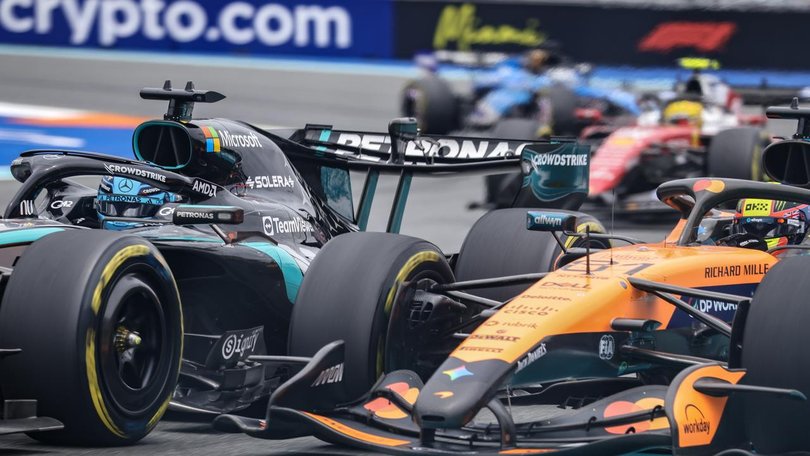
Formula 1 has acted swiftly to address the most prominent issue that arose with its recent engine regulations. Following the conclusion of the Miami Grand Prix, teams from across Formula 1, together with engine suppliers, the FIA, and Formula 1, have reached an agreement on the revision of power units that will come into effect in 2027. This decision comes in response to criticism voiced by drivers, who stated that for the 2026 season, Formula 1 cars required excessive energy recovery, preventing drivers from driving at full speed. According to the proposal, combustion power is set to be increased by 50kW, whereas the electric power of cars will decrease by 50kW. The change will tip the balance between internal combustion and electricity power from a close 50-50 to 60-40 ratio, favoring the former.
The recent increase in electric power use nearly tripled its role and boosted output from 120kW to 350kW. This resulted in drivers recharging batteries at full throttle, which led to odd speed losses approaching cornering and stretches of tracks. Changes made in Miami helped alleviate some issues; however, they were not enough.
Lando Norris in a recent interview said “It’s a small step in the right direction, but it’s not to the level that Formula 1 should still be at yet. If you go flat out everywhere and you try pushing like you were in previous years, you still just get penalised for it. You still can’t be flat out everywhere.”
Max Verstappen compared the new cars to “Mario Kart” and called the battery-assisted overtaking system “anti-racing.” Fernando Alonso dubbed the series the “battery world championship.”
Challenges With The 2027 Changes
While there may have been consensus regarding the matter, implementing such an agreement is going to be no mean feat. Increased combustion power would demand a faster flow of fuel. The teams planning to reuse their chassis from the season 2026 may find packaging issues difficult.
Then, there are the issues related to reliability. Having more fuel coupled with an increased load for engines can put stress on the current components. The power unit suppliers, such as Audi, Ferrari, Honda, Mercedes-Benz, and Red Bull Ford Powertrains, would now consider their options technically before voting.
FIA’s Statement
The FIA said the Miami updates improved racing and confirmed that all stakeholders backed further changes. The governing body stated that the 2027 package aims to deliver “fair and safe competition” and create cars that are “intuitive for drivers and teams.”
The FIA said, “The measures agreed in principle today for 2027 would see a nominal increase in internal combustion engine (ICE) power by ~50kW with a fuel-flow increase and a nominal reduction of the energy recovery system (ERS) deployment power by ~50kW.”
The final proposal will be refined by technical working groups and then submitted to the FIA World Motor Sport Council for approval later this year. If ratified, Formula 1’s 2027 cars will rely less on battery management and more on outright racing.