Formula One is already preparing the rewrite of its next engine generation’s storybook. Following intense criticisms of its hybrid engines from the drivers, the FIA and Formula One have finally agreed on a change in direction towards the next engine era. The move comes after concerns that the current 50-50 split between electric and combustion power is forcing drivers to slow down to recharge batteries, creating awkward racing and potential safety risks. In response, F1 will shift toward a more traditional setup, giving the internal combustion engine a larger share of the workload and restoring a natural racing feel.
As a consequence of all this, F1 intends to go back to a more classical approach with increased internal combustion involvement. In concrete terms, this means a 60-40 power allocation in favour of the former and a 50kW boost in engine output from a fuel flow increase, with a similar reduction in battery deployment. The goal is simple: less lifting and coasting, more flat-out racing, and fewer dangerous speed differences between cars.
The FIA has predicted about a few necessary changes for 2027, as it said, “The measures agreed in principle today for 2027 would see a nominal increase in Internal Combustion Engine (ICE) power by ~50kW with a fuel-flow increase and a nominal reduction of the Energy Recovery System (ERS) deployment power by ~50kW.”
The FIA’s Verdict
According to the FIA, the alterations are intended to make driving “safer, fairer and more intuitive” for drivers and their teams. The FIA evaluated the initial emergency modifications made during the Miami Grand Prix and determined that they increased competitiveness while minimizing energy harvesting.
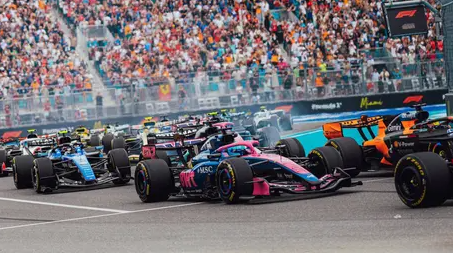
The emergency modifications made during the Miami Grand Prix include increasing the super-clipping threshold from 250kW to 350kW and decreasing energy harvesting during qualification from 8MJ to 7MJ. As stated by the FIA, no serious safety concerns were discovered following the Miami Grand Prix. Additional modifications will be considered, such as those related to wet weather conditions, starting procedures, and visual signals, which may be implemented as soon as the Canadian Grand Prix.
The FIA about the recently concluded Miami Grand Prix said, “The conclusion from the deployment of modifications in Miami… was that they resulted in improved competition and were a step in the right direction.”
Max Verstappen and Lando Norris Speak Out
Some of the strongest criticisms against the present system came from the drivers themselves. They pointed out that the system’s excessive reliance on batteries made their race more cautious as they had to slow down to recharge, as opposed to constantly speeding up.
Max Verstappen was particularly blunt. The four-time world champion compared the racing to “Mario Kart” and called battery-assisted overtaking “anti-racing.” He has repeatedly questioned whether this style of Formula 1 reflects the sport’s core identity.
Lando Norris echoed those concerns. Even after the Miami changes, the reigning world champion said he did not believe any driver truly enjoyed the current cars. His comments underlined a broader feeling in the paddock that energy management had become too dominant.