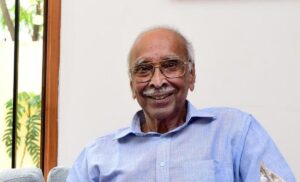
The silence has descended upon Indian cricket following the death of C. D. Gopinath, an iconic figure associated with one of the early achievements of the nation. At 96, he passed away in Chennai, leaving behind a direct connection with the first Test win for India. It is not merely about being a player from a bygone era; it is about being the sole representative of a period that instilled confidence within Indian cricket. His calm presence, both on and off the field, reflected a time when the game was played with restraint, simplicity, and quiet pride.
It also represents the conclusion of an entire generation of cricketers who laid the foundations of Indian cricket right from scratch. Following the demise of Datta Gaekwad in 2024, Gopinath stood out as the last surviving player of this legendary team. In this context, his passing away can be considered significant, both for the cricket community and symbolically.
The Last Witness of the Historic First
Gopinath’s own words reveal how understated that iconic 1952 victory truly was. That catch, off Vinoo Mankad, sealed India’s first Test win against England in Chennai. Reflecting on the moment, he expressed that his job as fielder was to take a catch and it wasn’t any achievement from his side.
The team had entered the match not expecting victory but the mindset changed after the win – “Oh, it’s also possible to win.” There were no dramatic celebrations. “We went to the dressing room, we said to each other, ‘Well done’, we packed up and went home.”
Also Read | I try and keep like Mahi Bhai: Prabhsimran Singh reveals getting inspired by MS Dhoni
C.P. Gopinath’s Impactful Career
Gopinath had a rather short but fruitful international career. Overall, he played eight tests, managing to score 242 runs, one of which included an unbeaten 50 on his debut in the test against England. On a domestic front, Gopinath proved himself as a solid player, becoming the skipper of the Madras side and scoring more than 4,000 runs in his first-class matches. Moreover, he continued to make valuable contributions after retirement, serving as a selector for India, chairing the selection committee and leading India on its 1979 tour of England.
However, even away from the field, Gopinath distinguished himself quite well, working his way up the ranks at Gordon Woodroffe, thus becoming the first Indian chairman in the organization. Despite all his achievements, however, he managed to stay humble and modest, stating that cricket just “came by.”
The Indian cricket fans remember him today not by numbers but by his mere presence at the right moment in time.