No one expected the 2026 F1 season to turn out as it did. Since the reveal of the 2026 regulations in 2025, the entire racing world and its fans were speculating how the racing in 2026 would look. Well…
Lets just suffice to say that F1 tried to fly too close to the sun and we all know what happens when you do that. But the drivers’ sheer will to compete and win has managed to save Formula 1’s image of being the pinnacle of motorsport. Kimi Antonelli’s spectacular run to the lead of the championship has got us fans glued to the seats again!
But here are the top 5 moments in 2026 where F1 failed to live up to its name.
- Max Verstappen warned everyone in the very beginning!
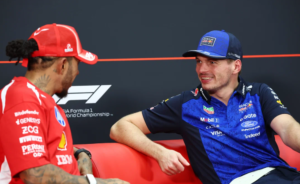
Max Verstappen, right after the very few laps in the pre-season practice had expressed his thoughts on the current regulation of F1 cars. By the first Grand Prix in Australia, everyone in the paddock, and the world was talking about how Max Verstappen had called out F1 as ‘Formula E on steroids’ and the 2026 regulations as ‘anti-racing’.
Honestly, I have always sided with Max in his statements about what goes on in Formula 1, and this time as well he had my full support. It only took the rest of the grid some time to catch up to the same frame of mind. Charles Leclerc, who during the Chinese Grand Prix had said that he liked this kind of close combat racing, just lately defended Max in his claims of the 2026 cars being ‘anti-racing’. Other drivers have also summed up the same in various press interviews throughout the course of this season!
- Drivers have to go slow in qualifying!
The way the 2026 F1 cars work has been clearly defined by the 2026 FIA regulations. The power unit has a 50% split between the battery and the internal combustion engine. Now this means that only 50% of the power comes from the ICE, and the rest from the battery.
You may ask well that doesn’t seem like a problem. Well, it is and it isn’t. The problem lies in the capacity of the battery itself. So two problems exist simultaneously – First, the battery drains out very quickly due to the very aggressive demands of the power unit. Second, the battery only holds a certain amount of charge before it goes empty.
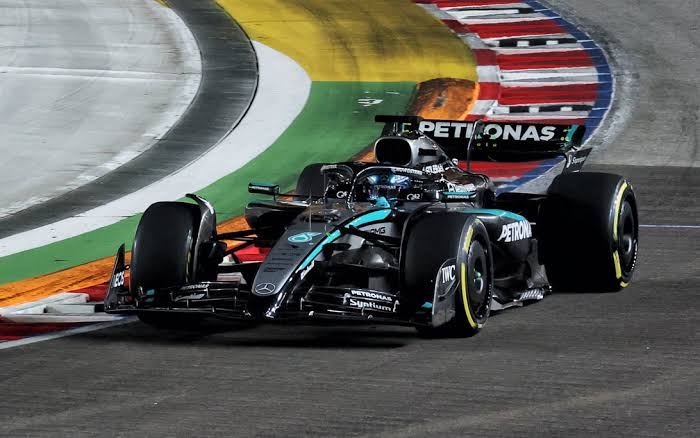
In qualifying, the drivers want to go out and drive the fastest lap on track. Which is the very point of qualifying. But sadly, due to the battery running out of juice mid-straight, the engines bog down and the car goes into super clipping mode and switches from deployment mode into recovery mode. This causes F1 cars to lose speed. So, drivers have to purposely drive slowly to recover energy before every straight to have enough deployment for a good lap time.
Let me ask you this – What is the purpose of an F1 car?
Also Read | Formula One CEO Stefano Domenicali Responds To Criticism Of New Rules
- 2026 F1 cars are driven more by computers than drivers!
One thing that a driver hates is losing control of his car. Well, the FIA just made that nightmare come true for not just 1 but all 22 drivers on the grid.
How?
The 2026 F1 cars are a hub of electronically controlled devices, sensors, battery, recovery, deployment, even the power outputs given by the driver! Lando Norris, after the Japanese grand Prix said that he could not chase Lewis Hamilton because he was afraid of the sudden surge of power output from the battery when he pressed the accelerator.
The energy deployment by 2026 F1 cars is completely controlled by an onboard computer and the drivers throughout the season have been faked out by their own cars. To follow another car closely requires precise control of the accelerator and brake pedals, but what is a driver supposed to do when his car does the opposite of what he wants it to do?
That’s how racing in Formula 1 in 2026 is turning out to be.
- Bizarre race starts to every Grand Prix
Since the 2026 F1 cars have lost the MGU-H, which was a device which kept the Turbocharger spooled up and the power output never bogged down. But thankfully to the FIA, the MGU-H was removed and this year the F1 cars have to rev high before every race start to produce enough exhaust gases to spool up the turbo so that the car has enough power off the start box.
This may not seem like much, but it has lead to bizarre race starts throughout the season. It lead to Franco Colapinto’s extraordinary save from going into the back of Liam Lawson’s car. It lead to Max Verstappen coming 2nd at the Hungaroring.
This requirement of the latest edition of F1 cars has introduced an extra level of difficulty for the drivers as now they have to maintain the perfect amount of revs as the lights go out. Otherwise, the drivers risk losing their entire effort to get a good lap time in qualifying, because if the turbocharger fails to spool up, the car has no power off the start box and barely rolls away causing a massive reduction in the launch velocity, and ends up losing the driver multiple grid positions.
Isaac Hadjar has been furious of this multiple times as he has been a victim of this high revving before race starts. The Red Bull RB22 has a very short rev window before the car either bogs down or stalls.
- Yo-Yo Racing is here!
Yes, you heard it right! Yo Yo racing. What is that? Well, imagine you are in an F1 car and you have more speed than the car ahead, so you overtake that car. Now just imagine yourself doing that and then running out of energy for the next straight and you have to sit and watch as the car behind just strides past you.
This has been the case for many a Grand Prix in 2026. Drivers charge up their batteries, make the overtake only to lose out the grid position after a single or a couple of corners. Only because the battery did not have any juice left. This may seem fun on TV for some people, cars passing and re-passing each other, creating tension about who will win the battle. But this excitement is not shared by the drivers and those who love racing for the sheer talent and skill required to make an overtake out on track, only to lose that to a battery and its deployment being controlled by a battery.
F1 in 2026, has been more of a disappointment than Logan Sargeant in the Williams in 2024. The amount of hype that was built by the FIA and F1 about how fast the F1 cars in 2026 would be has all been shattered by the stark reality of the slowness of the cars this season. Yeah, they go faster than the 2025 cars, but for how long? The FIA failed to mention how 2026 F1 cars would need to recharge after every couple hundred meters.
The FIA is already looking ahead to the next season and is planning a stronger split favoring the ICE. The proposed split is going to be 58-42 in 2027 and ultimately 60-40 in 2028. Hopefully, it brings back actual racing than the drivers feeling like they are playing Mario Kart and looking for powerups on track!
Should the FIA just bring back the V8s or V10s and run them on the sustainable fuel used by F1 nowadays, or do you like racing in F1 as it is today?