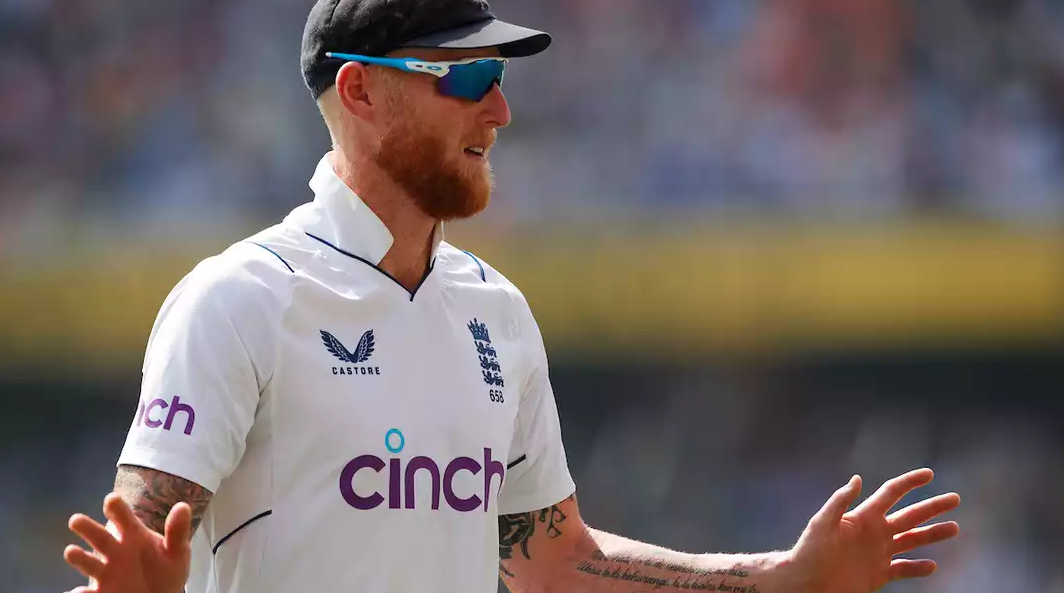
There has always been this force, an energy and an unmistakable thrill to being Ben Stokes — the likes of which cricket may never quite witness again. And perhaps the reason is simpler than it first appears.
Greatness in cricket is often measured by numbers. Runs. Wickets. Centuries. Averages. But there exists another category of greatness that statistics alone struggle to define. It is the ability to alter the emotional rhythm of a contest; to make an entire stadium believe that defeat can somehow still become victory. Ben Stokes mastered precisely that rarest of arts.
For well over a decade, he became the pulse of English cricket. At a time when England sought to redefine its identity, Stokes embodied everything the team wished to become — fearless, uncompromising and relentlessly competitive. His presence alone carried a certain theatre. Every sprint, every dive, every towering six and every hostile spell seemed to carry an intensity that belonged to him alone.
He was never merely participating in a game. He was contesting it.
The numbers, naturally, followed.
Across thirteen years of Test cricket, Stokes crossed the 500-run mark in nine separate calendar years. By 2015, only his third full year in the format, he had already scored over 700 Test runs before elevating himself further with a tally exceeding 900 runs in 2016. His remarkable longevity eventually produced more than 7,200 Test runs, four Ashes centuries, over fifty scores of fifty or more and a strike rate brushing sixty. Even more remarkably, only eighteen ducks arrived across 220 Test innings — a quiet yet compelling reminder of his reliability.
Yet batting represented only one dimension of his greatness.
Only five cricketers in the rich history of Test cricket have completed the extraordinary double of over 5,000 runs and more than 250 wickets. Ben Stokes now shares that exclusive company alongside Imran Khan, Ian Botham, Jacques Kallis and Kapil Dev. Lists containing names of such stature rarely require further explanation.
If the whites showcased his appetite for battle, England’s blue jersey witnessed his ability to conquer world cricket. More than 3,400 ODI runs, five centuries, twenty-four fifties, 74 wickets and, above everything else, the immortal triumph of the 2019 ICC Cricket World Cup firmly established him as one of the defining architects of England’s greatest white-ball era. Surrounded by exceptional talents such as Joe Root, Eoin Morgan, Jason Roy, Alex Hales and Moeen Ali, Stokes nevertheless remained the man England instinctively turned towards when the occasion became too large for ordinary cricketers.
Read More : ICC Women’s T20 World Cup: India’s Performance Across All 10 Editions
Perhaps that is what made him different.
There have undoubtedly been greater batsmen than Ben Stokes. Virat Kohli, Sachin Tendulkar, Kumar Sangakkara and Jacques Kallis have all produced careers decorated with even grander statistical monuments. But cricket has seldom produced many who could summon hope quite like Stokes. He made impossible pursuits seem realistic and improbable victories appear almost inevitable.
It is also one of cricket’s fascinating ironies that one of England’s greatest modern sporting icons was not English by birth. Yet few have worn the Three Lions with greater passion, commitment or emotional investment. He became English cricket’s ultimate adopted son and, in many ways, its defining competitor of the modern era.
Some retire having accumulated records. Others leave behind memories. And in the daring left hander’s case, there are far too many to take pride in- from the soaring triumph of winning the ICC Men’s 2019 World Cup on which England rode on Stokes’ brilliance to their brilliant success in the T20 World Cup to that gobsmacking take down of the Aussies in ‘that’ Headingley Test.
Ben Stokes leaves behind belief.
And perhaps that will forever remain the greatest measure of the extraordinary cricketer that Benjamin Andrew Stokes became.